Solar Nanocoating
Smart Material Solutions (SMS) has developed a multifunctional Performance-Enhancing Solar Nanocoating that increases solar panel efficiency by:
Capturing more sunlight using moth-eye anti-reflective structures and microscale light-trapping features that increase the path length of light inside the panel.
Resisting fouling by reducing adhesion of dust, pollen, sand, grime, and other particulates that can block sunlight.
Lowering operating temperature by increasing emissivity, enabling passive cooling and improving real-world efficiency.
Reducing reflection and glare, which improves energy capture and, in defense applications, help avoid revealing a soldier’s position.
SMS’s solar nanocoatings have demonstrated efficiency gains across multiple solar technologies, including amorphous silicon, crystalline silicon, organic, and multijunction III-V cells. For example, SMS’s nanocoating yields up to 5% more current from multijunction solar cells at normal incidence and over 20% more current at 80° incidence compared to state-of-the-art AR-coated solar glass. Preliminary testing also confirms UV stability and abrasion resistance.
Panel without Nanocoating
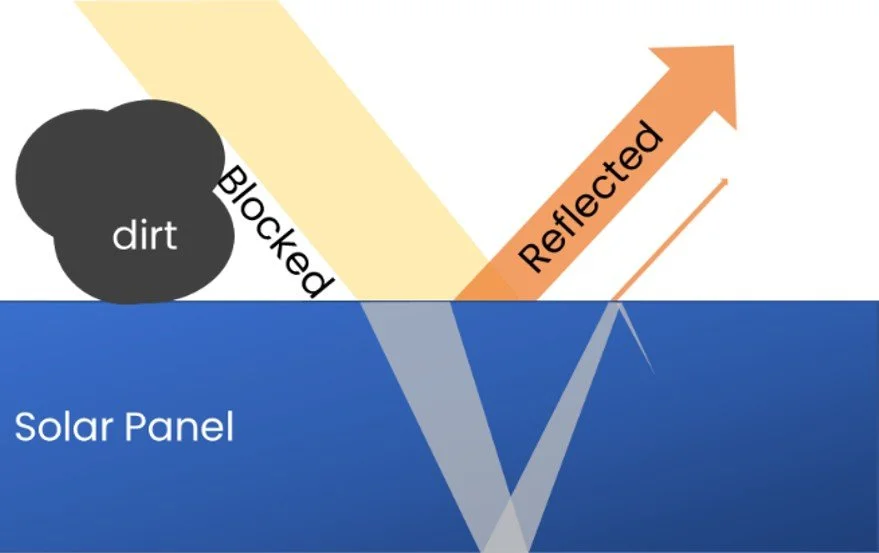
Uncoated panels exhibit strong reflections, absorb less light, and are more susceptible to the buildup of dust, dirt, and grime that block incoming light, and operate at elevated temperatures.
Panel with Nanocoating
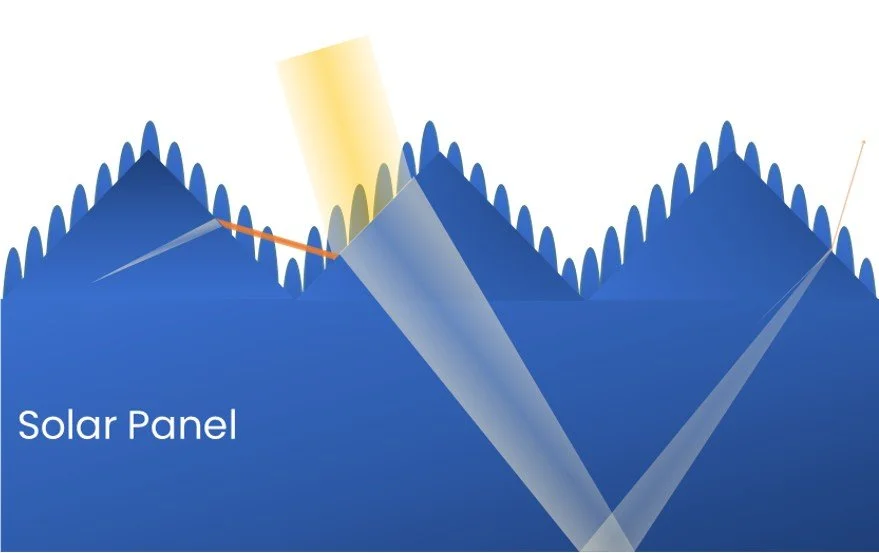
Microscale light-trapping features increase optical path length and decrease operating temperature, while nanoscale moth-eye structures reduce Fresnel reflections and decrease surface soiling.
This technology was developed with SBIR funding from the US Army and Space Force, in collaboration with PowerFilm Solar, MicroLink Devices, and MicroContinuum, and was selected as a winner of the Army XTechSBIR CleanTech Competition.
Performance Enhancement
Efficiency Increase
SMS’s nanocoatings provides similar relative efficiency gains across a wide range of solar technologies, including amorphous silicon, crystalline silicon, organic, and multijunction III-V cells.
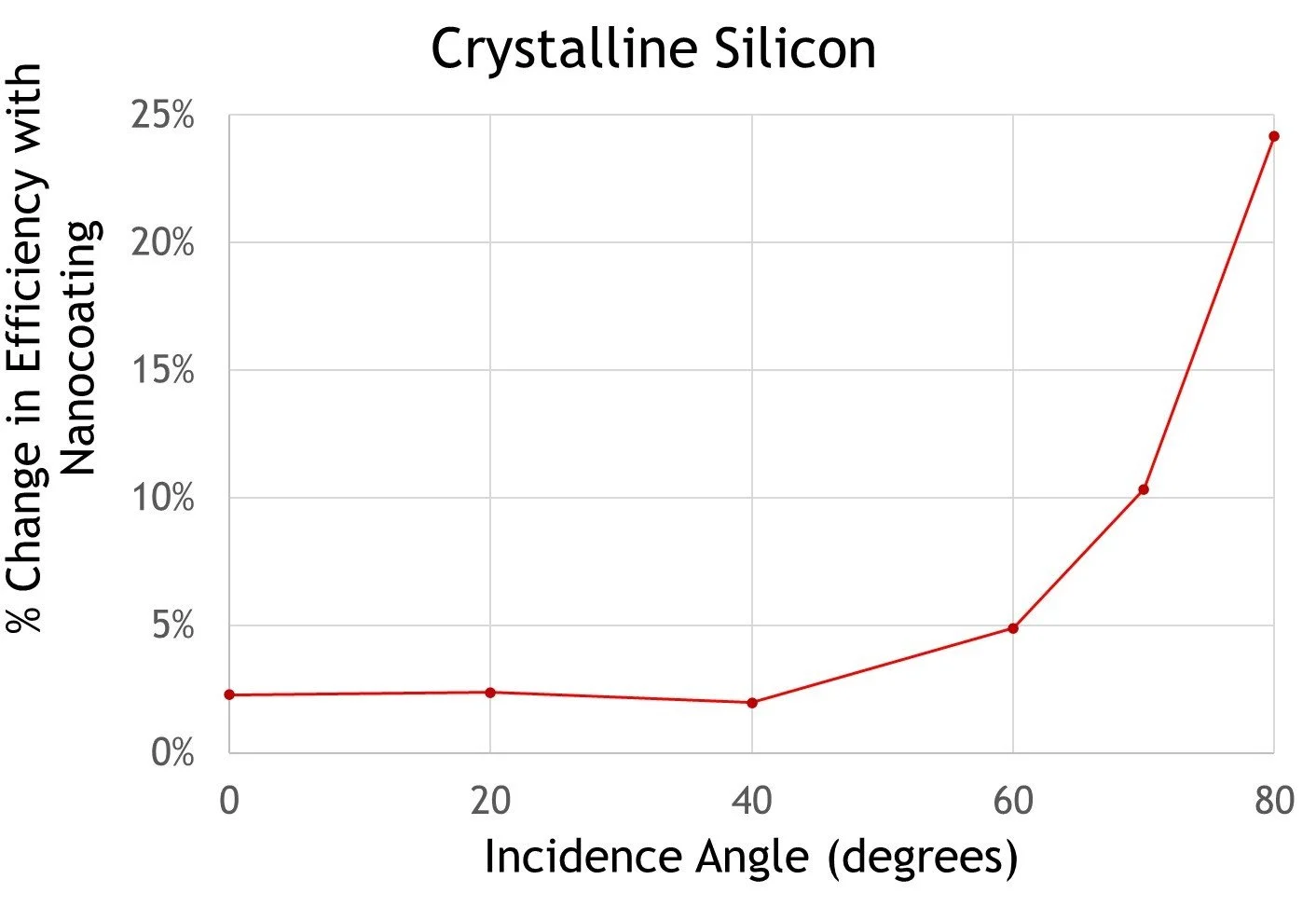
Efficiency increase of silicon cells due to SMS’s nanocoating.
As an example, we measured the efficiency of crystalline silicon solar cells covered in PET by PowerFilm as a function of incidence angle using a solar simulator with an AM1.5G filter. An adhesive-backed retrofit version of SMS’s nanocoating was then applied to the same cells before repeating the measurements. The plot on the right shows the increase in power conversion efficiency after applying SMS’s nanocoating.
These efficiency gains were used to estimate increases in daily power output, summarized in the table below, assuming direct sunlight on a south-facing panel in the northern hemisphere on the equinox.

Percent increase in daily power output of silicon solar cells due to addition of SMS’s Nanocoating.
Dust Mitigation
SMS’s nanocoating also reduces the adhesion of dust, which can accumulate on solar panels and block a significant portion of the incoming light. In addition, nanofeatures can impart self-cleaning properties that make it easier for rain to remove any dust that has accumulated.
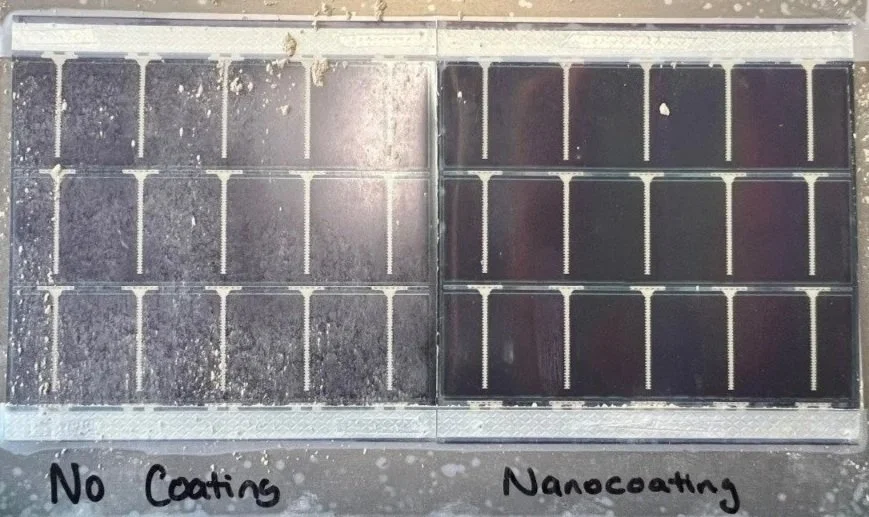
Photo showing solar cells with no coating (left) and with SMS’s nanocoating (right) after dust exposure.
The photo on the left shows two PowerFilm amorphous silicon solar cells after dust exposure. The uncoated cell (left) exhibits substantial dust accumulation, while the cell with SMS’s nanocoating (right) remains largely free of dust, demonstrating the film’s dust-mitigation capability. The same mechanism can also impart self-cleaning properties by helping water more effectively remove adhered dust.
Passive Cooling
SMS’s nanocoating can also substantially lower panel operating temperature. Since panel efficiency drops as temperature increases, a decrease in panel temperature can result in a measurable increase in real-world power output. Researchers have shown that engineered microstructures can increase emissivity and promote radiative cooling.
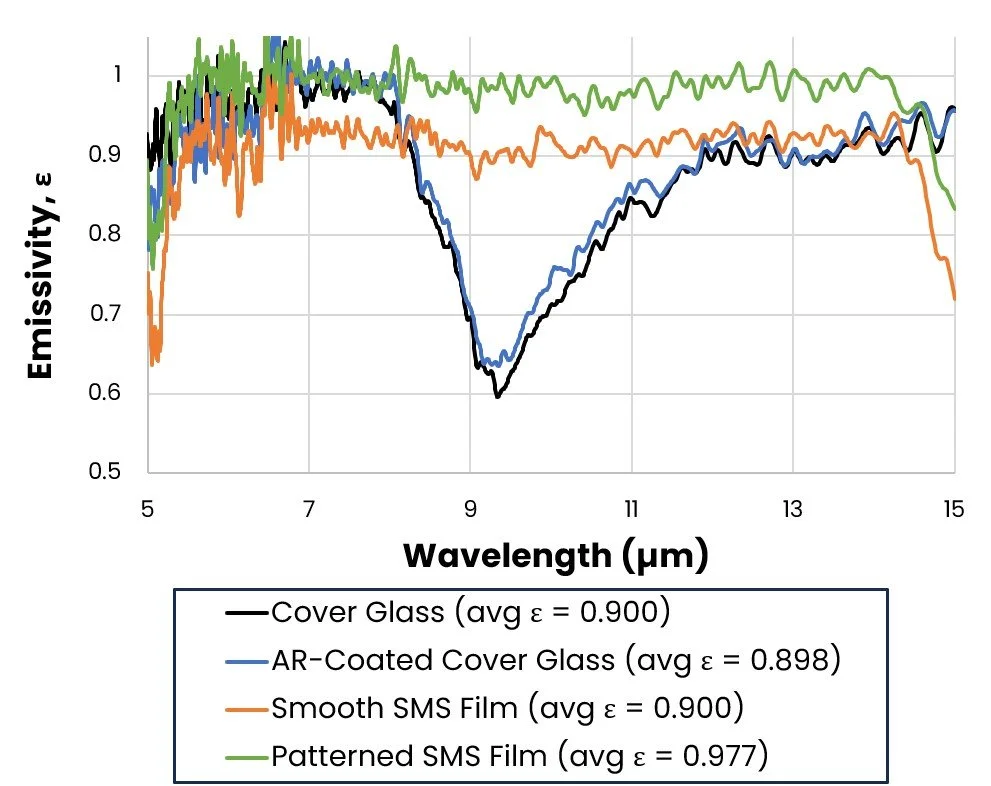
Emissivity of SMS’s nanopatterned film and other coatings measured with FTIR.
SMS therefore measured the emissivity of its patterned film and compared it to other solar cover glass solutions. The plot on the right highlights the high emissivity and superior passive cooling of SMS’s nanopatterned film relative to state-of-the-art AR-coated solar cover glass. Preliminary results suggest a 6-8°C reduction in panel operating temperature, which can result in as much as 3-4% increase in real-world panel efficiency compared to AR-coated solar cover glass.
Suppression of Bright, Specular Reflections
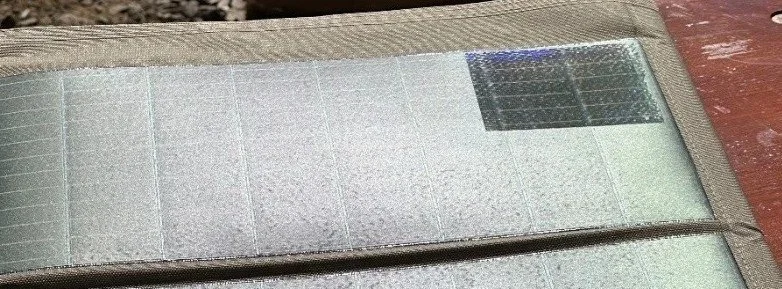
Photo of a PowerFilm panel with reflection suppression due to SMS’s nanocoating on the top, right corner.
SMS’s nanocoating also suppresses bright, specular reflections. The photo on the left shows sunlight reflecting off a flexible PowerFilm panel with our light-trapping nanocoating on the top, right corner of the panel. The nanocoating suppresses the bright reflection in this region.
Film Options
Film Types
SMS has developed two types of nanocoating, each with the ability to impart light-trapping, self-cleaning, and passive-cooling properties to solar panels:

Solar Frontsheet Film
Frontsheet Film: Replaces the frontsheet film in existing manufacturing processes with a light-trapping, self-cleaning film like the one pictured on the left.
Retrofit Film: Adhesive-backed film that can be added to existing panels to increase efficiency.
Nanopatterns
SMS has developed a variety of nanoscale and microscale features for its light-trapping films such as those described below.
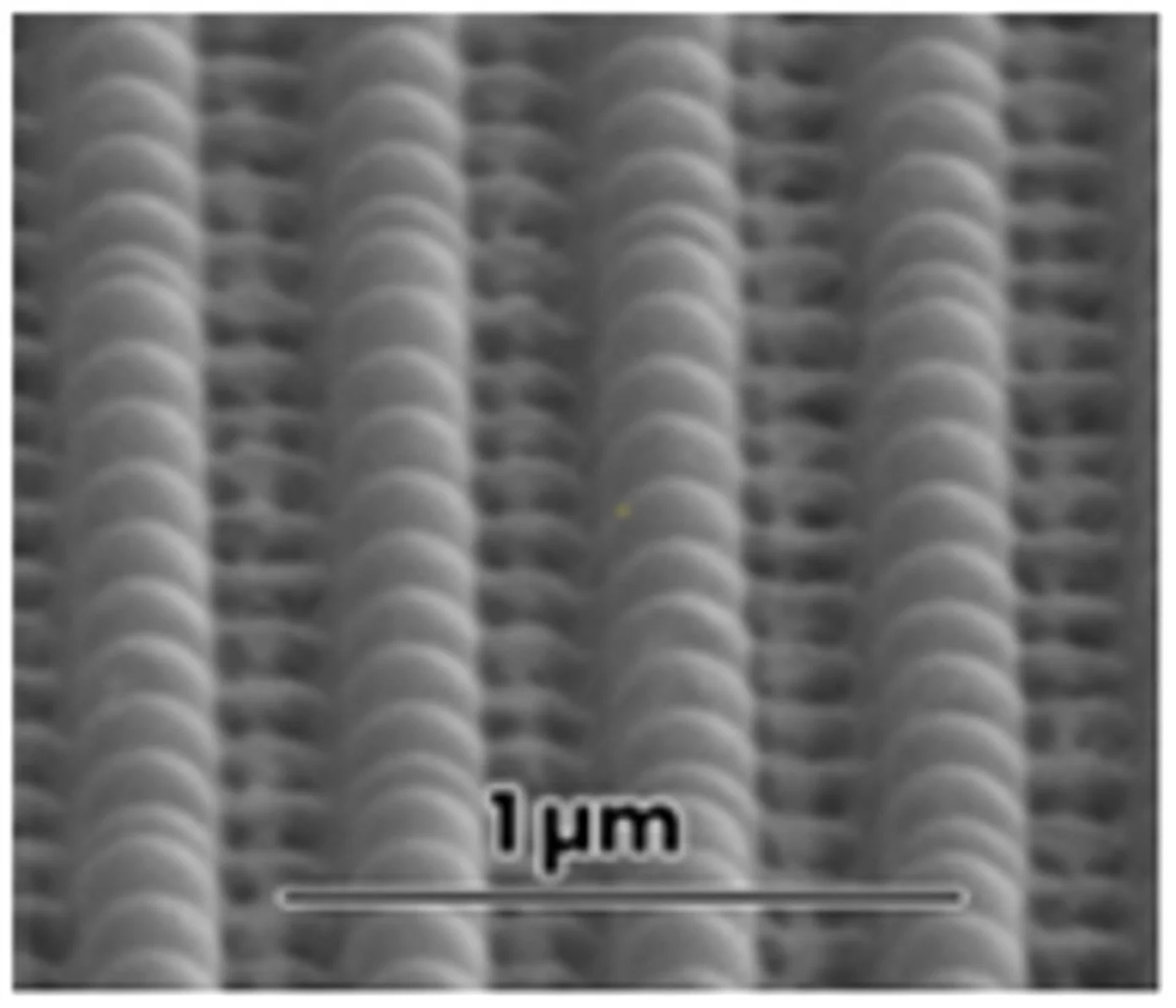
Moth-Eye
Nanoscale features that decrease Fresnel reflections by creating a graded-refractive-index structure
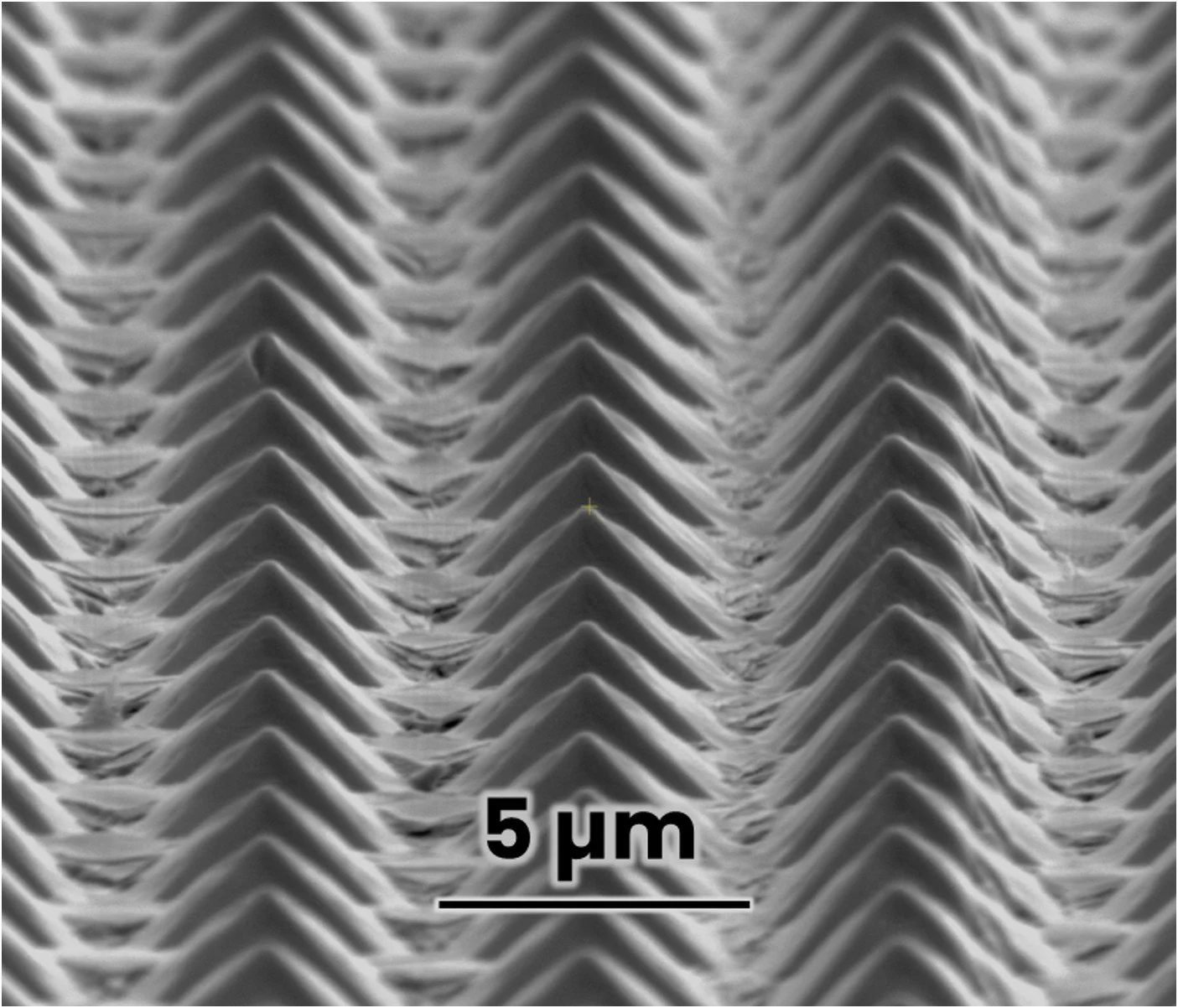
Light-Trapping
Microscale features that bend light to increase its path length inside a panel
Can have a variety of shapes including bumps, pyramids, and cones
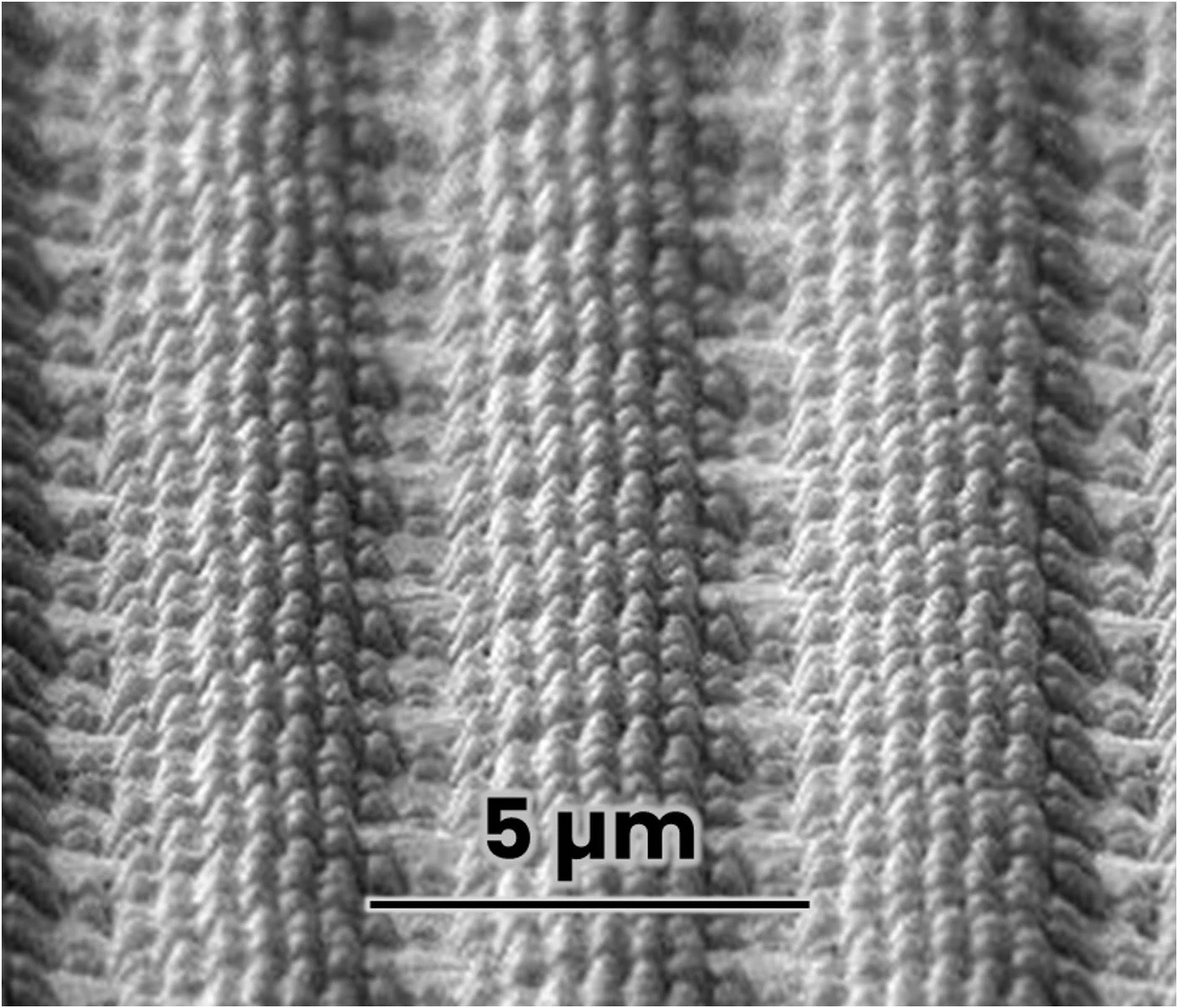
Hierarchical
Multiscale features that contain both nanoscale moth-eye features and microscale light-trapping features
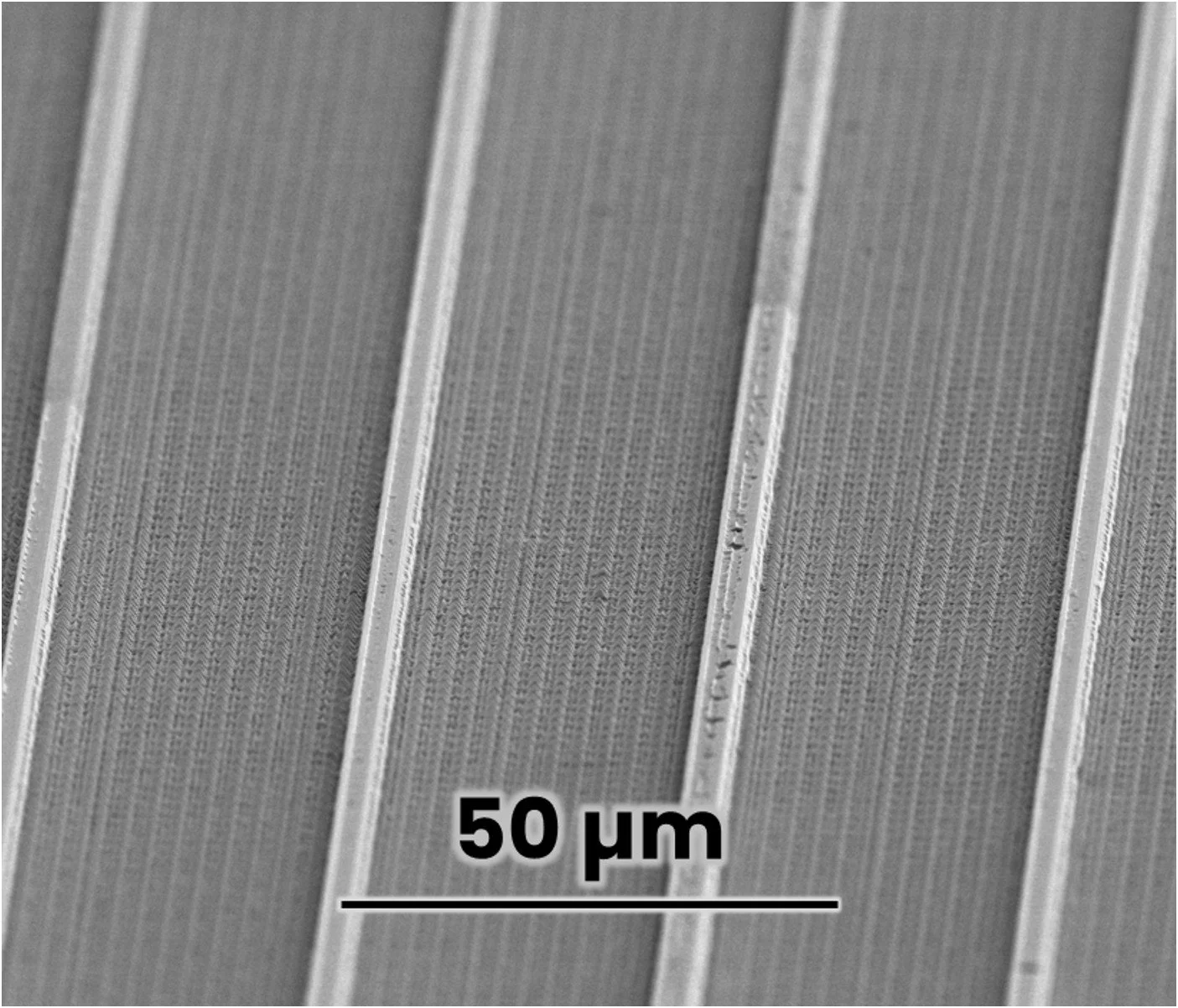
Armor
Large microscale features that can be added to any pattern to mechanically protect moth-eye and/or light-trapping features
Next Steps
SMS is pursuing additional funding opportunities through SpaceWERX Phase II and Army Sequential Phase II SBIR programs. We welcome partners interested in co-development or field testing. Potential customers or end users can also strengthen our proposals by sharing operational requirements, providing technical feedback, or offering letters of support that demonstrate mission relevance and transition potential. Contact us to learn more or request a sample!